
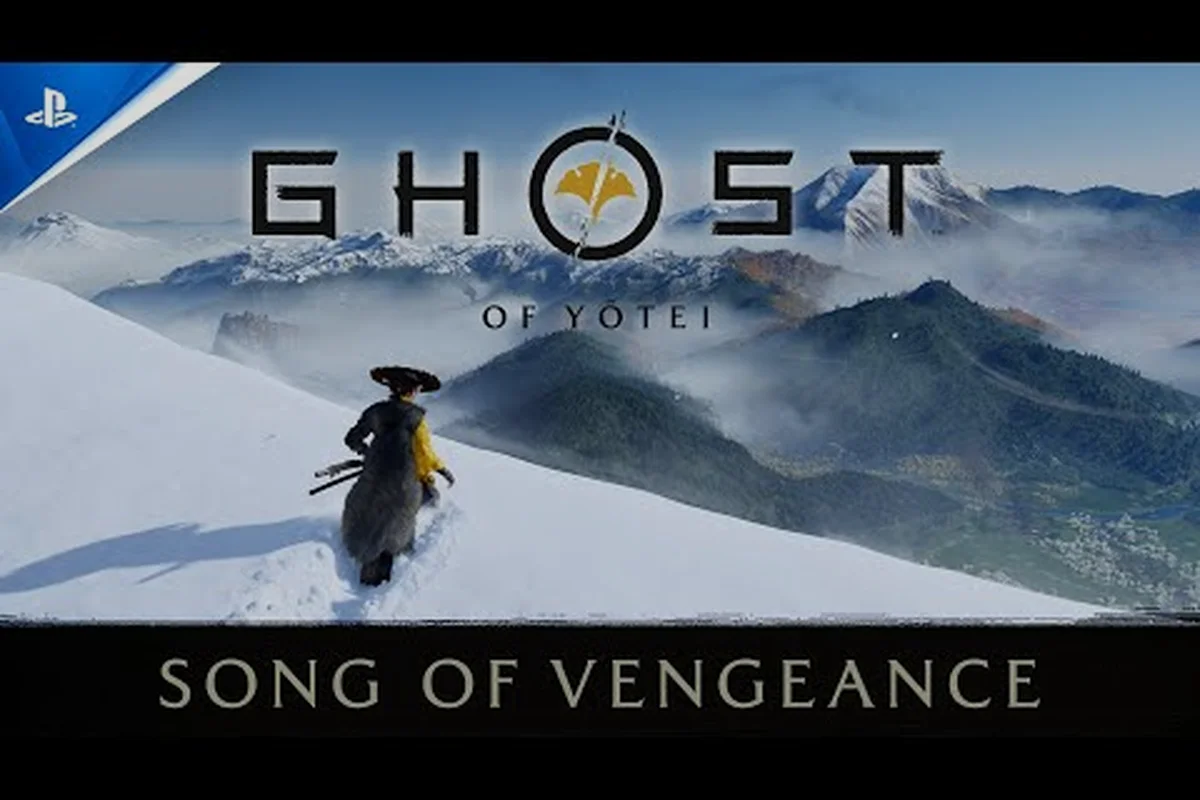
The Ghost of Yotei Metacritic score landed at 89 on PS5 shortly after the October 2, 2025 launch, placing Sucker Punch's open-world sequel comfortably among the year's best-reviewed exclusives. Critics consistently praised the weapon counter system, the non-linear Yotei Six hunt, and the dense 1603 Ezo setting, while a smaller group flagged pacing issues in the middle chapters and occasional camera frustrations during duels. Understanding what drove that score matters because it tells you exactly where the game excels, where it stumbles, and whether those weaknesses will actually bother you based on how you play.
The critical consensus breaks down into a few clear themes that we will unpack in detail below, alongside hard performance data for both PS5 and PS5 Pro, the accessibility options that reviewers highlighted, and the concrete differences between a standard playthrough and New Game+.
Ghost of Yotei Metacritic Score Breakdown by Platform
The Ghost of Yotei Metacritic aggregate sits at 89 based on roughly 120 critic reviews, with the PS5 Pro version tracking slightly higher at 90 due to improved frame-rate consistency in quality mode. That gap is small but meaningful: it reflects the fact that performance issues on the base PS5 were the most common technical complaint in otherwise glowing reviews.
| Platform | Metacritic Score | Notable Critic Consensus |
|---|---|---|
| PS5 (Base) | 89 | Stunning world, deep combat, minor frame dips in dense areas |
| PS5 Pro | 90 | PSSR upscaling delivers locked 60 FPS in performance mode |
| Critic Range | 75–100 | Lowest scores cite pacing; highest praise the Yotei Six structure |
What reviewers agreed on across the board was that the weapon counter system replaces the stance mechanic from Ghost of Tsushima with something more tactical. Each weapon type—katana, dual katanas, odachi, yari, and kusarigama—counters a specific enemy archetype, which forces you to think about loadouts before engagements rather than switching stances mid-fight. The official character and combat page confirms this design shift, and it was the single most-cited positive in the Ghost of Yotei Metacritic review roundup.
The lower-scoring reviews, mostly in the 75–80 range, pointed to the middle act where the non-linear structure can leave you under-leveled for certain Yotei Six members if you tackle them in the wrong order. That is a legitimate concern, but it is also something the game's guiding wind system partially mitigates by steering you toward appropriate-level content. If you want a deeper look at how progression flows, the beginner guide breaks down the recommended approach to the hunt order.
Ghost of Yotei Technical Performance Review
Katana Counter Matchup vs. the Yotei Six
The weapon counter system dictates optimal boss order beyond the Snake’s forced first slot. Your starting katana counters sword users, making it effective against any Yotei Six member wielding a katana. However, confronting a spear-wielding outlaw before training under a master to unlock the dual katanas leaves you without a counter weapon, forcing a reliance on perfect dodges and the grappling hook for stagger windows. Prioritize unlocking the yari for sickle-wielding enemies before attempting their confrontation to maintain the counter advantage.
Cooking Buffs and Camp Resting for NG+ Carryover
Your New Game+ run carries over all gear, upgrades, cosmetics, resources, and collectibles, but camp cooking buffs are temporary. Before the final Lord Saito fight in NG+, cook a meal at a camp for a stat boost to stack with your fully upgraded gear. Since resources carry over, you can freely purchase and cook the most expensive stat-boosting meals without worrying about resource depletion, a luxury not available in a fresh playthrough where you must ration ingredients for early-game survival.
The Ghost of Yotei performance picture is genuinely good, though not flawless. On base PS5, performance mode targets 60 FPS at a dynamic 1440p resolution, and it holds that target in most open-world traversal. The dense forests around Mount Yotei and the busy streets of the larger settlements cause occasional dips to the mid-50s, which Digital Foundry-style analysis and community testing have both confirmed. Quality mode on base PS5 runs at 30 FPS with a native 4K presentation and enhanced draw distances, but the frame rate is less stable during combat-heavy sequences.
| Mode | Resolution | Frame Rate | Stability Notes |
|---|---|---|---|
| Performance (PS5) | Dynamic 1440p | 60 FPS target | Dips to ~55 FPS in dense forests |
| Quality (PS5) | Native 4K | 30 FPS target | Minor drops during particle-heavy fights |
| Performance (PS5 Pro) | 4K via PSSR | Locked 60 FPS | Stable across all regions tested |
| Quality (PS5 Pro) | 4K + Advanced RT | 30–40 FPS | Ray-traced reflections, variable frame rate |
The PS5 Pro version is where the Ghost of Yotei performance conversation gets more interesting. Sucker Punch shipped a day-one Pro patch that uses PSSR AI upscaling to hit a locked 60 FPS in performance mode at an effective 4K output. Quality mode on Pro adds advanced ray tracing for reflections and shadows, but it runs at a variable 30–40 FPS, which most players will find less appealing than the smooth performance mode. The PS5 Pro update guide tracks the patch history and what changed between launch and the current version.
Load times are a strong point across both consoles. Fast travel between regions averages 3–4 seconds on base PS5 and 2–3 seconds on Pro, thanks to the custom SSD integration. The grappling hook traversal also benefits from this, since you rarely wait more than a second when transitioning between anchor points in the open world.
Assist Options and Accessibility Settings
The Ghost of Yotei accessibility suite is one of the most comprehensive Sucker Punch has shipped, and reviewers who focus on inclusive design gave it specific praise in their write-ups. The game includes over 40 individual accessibility toggles spread across visual, audio, and gameplay categories, which is a meaningful step up from the already-solid Ghost of Tsushima implementation.
| Accessibility Category | Key Options | What It Does |
|---|---|---|
| Visual | High-contrast mode, subtitle size, colorblind filters | Improves enemy readability and text clarity |
| Audio | Independent volume sliders, mono audio, visual cues | Separates combat, dialogue, and ambience levels |
| Gameplay | QTE simplification, auto-aim assist, reduced camera shake | Lowers execution barriers without removing challenge |
| Motor | Button remapping, hold-to-toggle options, camera sensitivity | Supports players with limited fine motor control |
The Ghost of Yotei accessibility options that got the most attention in reviews were the QTE simplification and the camera shake reduction. The former turns the timing-based prompts during boss executions into simple button holds, which removes a barrier for players who struggle with precise timing. The latter is particularly useful during duels, where the camera can swing aggressively when you parry and counter.
The game also includes a full button remapping tool that works independently of the PS5 system-level remapping. This is important because it lets you assign the parry and dodge actions to shoulder buttons if you find face-button inputs uncomfortable during extended sessions. The settings guide covers the full range of options and recommends specific configurations for different playstyles.
Ghost of Yotei NG+ Differences and Carryover
PSSR Upscaling and Frame Rate Targets on PS5 Pro
The PS5 Pro’s PSSR AI upsampling and advanced ray tracing deliver a performance target distinct from the base PS5. While the base console targets a standard 30 FPS fidelity mode, the Pro’s upscaling allows for higher internal resolutions without sacrificing frame rate. This is critical for the combat system, as the weapon counter windows against the Yotei Six require precise timing; a stable frame rate on the Pro reduces input latency, making parry and counter execution against fast sword and sickle attacks more consistent than on the base model.
The Onryō Trailer vs. In-Game Lord Saito Encounter
The launch trailer titled "The Onryō" hints at the final boss, Lord Nariaki Saito, but the in-game encounter differs from the marketing. The trailer showcases a vengeful spirit aesthetic, yet the actual fight is a grounded duel against a renegade samurai. This discrepancy is a point of criticism; the trailer’s supernatural tone misleads players on the final confrontation’s mechanics, which rely on the counter system for a sword-wielding enemy rather than a spectral boss fight. This marketing versus reality gap is a key point in critical reviews.
The Ghost of Yotei NG+ differences are substantial compared to the base playthrough, and they go beyond simple stat inflation. New Game+ unlocks after the credits roll, and it carries over all gear, upgrades, cosmetics, resources, and collectibles from your first run. That means you start the Yotei Six hunt with your full weapon arsenal and all charm slots already unlocked, which fundamentally changes how the early game feels.
| Carryover Item | Standard NG+ | Notes |
|---|---|---|
| Weapons & Upgrades | Full carryover | All weapon tiers and techniques available from start |
| Charms & Armor | Full carryover | All charm slots unlocked immediately |
| Resources & Materials | Full carryover | Zeni, crafting materials, and consumables persist |
| Collectibles | Full carryover | Sumi-e paintings, fox dens, and onsen discoveries remain |
| Story Progress | Reset | Yotei Six hunt restarts with all bosses available |
The most significant Ghost of Yotei NG+ differences come from the new Ghost Flowers currency, which only appears in New Game+. You earn Ghost Flowers by defeating the Yotei Six again, clearing duel challenges, and completing the new bounty target system. These flowers purchase exclusive armor dyes, weapon skins, and a set of new charm upgrades that are not available in the standard playthrough.
Enemy scaling also changes in NG+. Enemies start at a baseline that matches your end-of-first-run power level, and they scale upward as you progress through the Yotei Six hunt again. This keeps the challenge meaningful even with maxed gear, and it is the main reason the trophy list guide recommends NG+ for the platinum rather than a fresh run. The new difficulty options that unlock alongside NG+ also let you push enemy aggression and damage values higher if the standard scaling feels too forgiving.
What Critics Got Wrong and Right
Looking past the raw Ghost of Yotei Metacritic number, the review discourse reveals a few blind spots worth understanding before you buy. The most common criticism—that the middle act drags—is heavily dependent on playstyle. If you engage with the side content like fox dens, sumi-e painting spots, and the bounty system, the pacing feels natural because you are constantly unlocking new tools. If you beeline the main story, you will hit level walls that force grinding, which is where the pacing complaints originate.
Critics also underweighted the Ghost of Yotei performance improvements in the post-launch patches. The day-one version had more frequent frame dips in the dense forest regions, but subsequent updates smoothed those out significantly. The patch notes guide documents these changes, and community testing confirms that the current version holds 60 FPS much more consistently than launch builds.
On the positive side, reviewers correctly identified the weapon counter system as the game's strongest mechanical innovation. The way each weapon type hard-counters specific enemy archetypes creates a rock-paper-scissors loop that rewards preparation and loadout flexibility. This is a meaningful evolution from Ghost of Tsushima's stance system, which required less strategic depth because you could switch stances instantly in combat.
The non-linear Yotei Six structure also received well-deserved praise. Being able to choose which of the six renegade samurai to hunt first, in any order except the Snake and Lord Saito, creates genuine player agency that most open-world games lack. The official game page emphasizes this freedom, and it holds up in practice because each boss has a distinct arena, moveset, and set of environmental mechanics.
Frequently Asked Questions
Is the Ghost of Yotei Metacritic score higher than Ghost of Tsushima?
Yes, by a small margin. Ghost of Yotei holds an 89 on PS5, while Ghost of Tsushima's original PS4 release sits at 83. The sequel's improved combat depth, better performance on PS5 hardware, and more ambitious non-linear structure all contributed to the higher aggregate score.
Does Ghost of Yotei run at 60 FPS on base PS5?
Performance mode targets 60 FPS at dynamic 1440p resolution, and it holds that target in most areas. Dense forest regions and busy settlements can cause dips to the mid-50s, though post-launch patches have improved stability. Quality mode runs at 30 FPS with native 4K resolution.
What accessibility options does Ghost of Yotei include?
Ghost of Yotei ships with over 40 accessibility toggles spanning visual, audio, gameplay, and motor categories. Highlights include QTE simplification, high-contrast mode, colorblind filters, independent volume sliders, and full button remapping that works independently of PS5 system settings. These options let you tailor combat and exploration to your needs without compromising the experience.
What carries over into Ghost of Yotei New Game+?
All weapons, armor, charms, resources, cosmetics, and collectibles carry over into New Game+. Story progress resets, but the Yotei Six hunt restarts with all bosses available. New Game+ also introduces Ghost Flowers, a currency used to purchase exclusive dyes, weapon skins, and charm upgrades.
Are there any Ghost of Yotei performance differences on PS5 Pro?
Yes. On PS5 Pro, performance mode uses PSSR AI upscaling for a locked 60 FPS at effective 4K, while quality mode adds advanced ray tracing at a variable 30–40 FPS. Load times are also slightly faster on Pro hardware, making it the better choice for the Yotei Six hunt.