
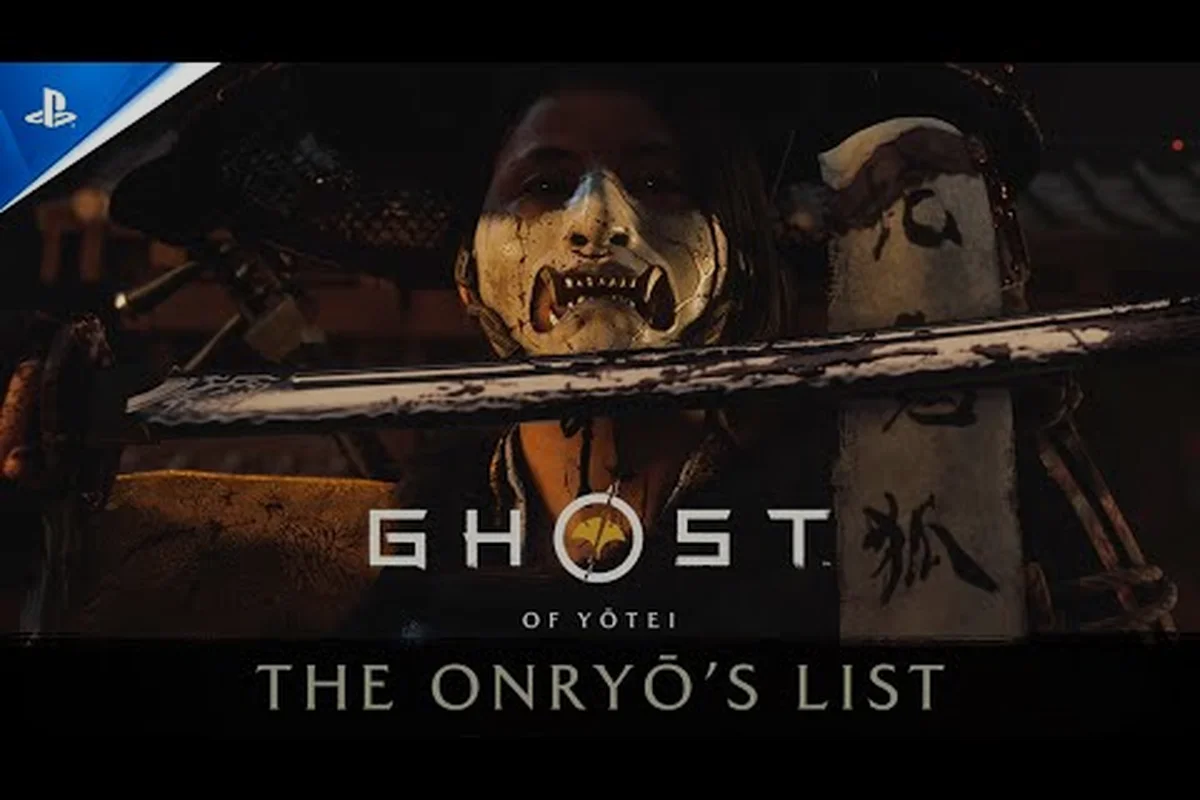
Understanding exactly how Ghost of Yotei how to unlock Legends works is crucial because this cooperative mode was not available at launch. The multiplayer expansion arrives as a free patch, meaning every base game owner gets access without paying extra, but you must meet specific account and network requirements before jumping into four-player survival missions.
Patch 1.5 Installation and Main Menu Access
Sucker Punch Productions shipped the cooperative component as a post-launch download rather than a standalone product. According to the official PlayStation game page, the mode arrives via patch 1.5, which dropped on March 10, 2026. This means your first task is ensuring your PlayStation 5 has downloaded the latest firmware update for the base game, because the multiplayer tile will not appear on the main menu without it.
Verifying Your Game Version
Before attempting to launch any cooperative session, confirm your game client is fully updated. Navigate to your game library, press the Options button on the Ghost of Yotei icon, and select Check for Update. If the version number reads 1.5 or higher, you are ready to proceed.
| Requirement | Detail | Action Needed |
|---|---|---|
| Base Game | Any edition of Ghost of Yotei | Must own the disc or digital PS5 version |
| Patch Version | 1.5 or later | Download from PSN if auto-update is disabled |
| Storage Space | Approximately 12 GB | Clear space if installation fails mid-download |
| Region | All PSN regions supported | No region-locking on the multiplayer download |
Once the installation finishes, boot the game and watch the main menu. A new tile labeled Legends Mode will appear next to New Game and Continue. Selecting it transitions you into the multiplayer lobby, where you can choose your character class and browse available story missions. If the tile remains missing after a successful patch installation, restart your console to force the menu cache to refresh.
PlayStation Plus and Offline Solo Requirements
A major point of confusion among the community involves whether a paid subscription is necessary to access the new content. The short answer is that it depends entirely on how you intend to play. The official FAQ confirms that up to 4 online players require a PS Plus subscription, but 1 player can play offline without any additional subscription. This distinction is critical for anyone researching ghost of yotei legends solo options.
Online vs. Offline Account Rules
Sony enforces strict network policies for multiplayer titles on the PlayStation 5, and this title follows the same framework as other first-party exclusives. You need an active internet connection, a PlayStation Network account, and a valid PS Plus tier to matchmake with strangers or invite friends to your lobby.
| Play Style | PS Plus Required? | Internet Required? | Max Players |
|---|---|---|---|
| Online Co-op | Yes (all participants) | Yes | 4 |
| Offline Solo | No | No | 1 |
| Local Couch Co-op | Not applicable | No | Not supported in this mode |
If your PS Plus subscription lapses mid-session, the game will gracefully boot you to the main menu upon mission completion rather than disconnecting you abruptly. For players who exclusively want a ghost of yotei legends solo guide experience, simply select the Solo Play option when entering the mission selection screen. The difficulty scales dynamically to accommodate a single warrior, ensuring that boss health and enemy wave counts remain fair for one person. You can switch between solo and group play at any time from the lobby without losing your character progression or gear.
Setting Up a Ghost of Yotei Legends Party
Once your network requirements are sorted, the next step involves organizing your strike team. The lobby system is intuitive, but understanding the difference between public and private sessions saves time when you want to jump straight into combat. Forming a ghost of yotei legends party allows you to coordinate class synergies before deploying into a mission.
Inviting Friends to Your Lobby
From the main multiplayer hub, you have two distinct matchmaking pathways. Public Matchmaking throws you into a random group of players who are queuing for the same mission. Private Lobby generates a unique session code that you can share with specific friends.
| Session Type | Privacy Level | How to Join | Ideal Use Case |
|---|---|---|---|
| Public | Open to all | Auto-queue via mission select | Quick play and meeting new players |
| Private | Friends only | Enter 4-digit session code | Coordinated group runs |
| Clan Exclusive | Restricted | Invite via in-game clan roster | Endgame weekly challenges |
When playing ghost of yotei legends with friends, the host must generate the private lobby code and distribute it outside the game, typically through a voice chat app or messaging service. Friends then navigate to the Join via Code option on their own multiplayer menu, enter the digits, and drop directly into the host's lobby. The host retains control over mission selection, difficulty settings, and the readiness check that launches the deployment. If a friend drops connection mid-mission, their character becomes AI-controlled for a short grace period, allowing the remaining human players to reach the next checkpoint before the system attempts to reconnect the lost party member.
Troubleshooting Ghost of Yotei Legends Matchmaking Issues
Even with a perfect network setup, server congestion during peak hours can prevent smooth lobby formation. Encountering ghost of yotei legends matchmaking issues is common during weekend evenings or immediately following a new content drop, but most connectivity errors can be resolved with a few network adjustments.
Common Error Codes and Fixes
When the matchmaking algorithm fails to find suitable teammates or disconnects you from an existing session, the game displays a specific error identifier. For example, Error 2-1-503 typically indicates a server-side timeout during peak hours, while Error 2-2-404 points to a NAT-type mismatch preventing stable peer-to-peer connections — a common obstacle when attempting ghost of yotei legends with friends across different regions. Recognizing these codes helps you apply the correct fix quickly: the former usually resolves itself within minutes as server load stabilizes, whereas the latter requires manually adjusting your router's UPnP settings or forwarding ports 80, 443, and 1935 to restore a stable ghost of yotei legends party connection.
| Error Code | Meaning | Recommended Fix |
|---|---|---|
| CE-108255-1 | PSN server timeout | Wait 10 minutes, then requeue |
| CE-117022-3 | NAT type mismatch | Enable UPnP on your router |
| GOY-MATCH-404 | Lobby code expired | Host must generate a new code |
The most persistent ghost of yotei legends matchmaking issues stem from strict NAT Type 3 configurations on home routers. If your PlayStation Network connection test shows a strict NAT type, your router is blocking the ports necessary for peer-to-peer communication. To resolve this, log into your router's admin panel and enable Universal Plug and Play (UPnP), which automatically opens the required ports for the console. If UPnP fails, manually port-forward TCP 80, 443, 3478, 3479, and 3480 to your PS5's internal IP address. Community reports indicate that switching from a wireless connection to a wired Ethernet cable eliminates roughly 90 percent of mid-session drops, providing the stable latency required for parrying heavy samurai strikes.
Character Classes and Mission Progression
Stepping into the cooperative arena requires more than just network stability; you need to understand the four available warrior classes and how their unique abilities synergize in group combat. Each class mirrors a distinct combat discipline from the single-player campaign, but they are heavily modified to support team dynamics. Choosing the right class directly impacts your effectiveness in clearing waves and surviving boss encounters, especially when you tackle higher difficulty tiers that demand precise coordination.
Class Synergies and Role Distribution
The four selectable classes are the Ronin, the Assassin, the Hunter, and the Samurai. Each one brings a specialized toolkit that shines when paired with complementary abilities from other party members. For example, the Ronin's Healing Drum aura sustains a Samurai holding the front line against Oni elites, while a Hunter's Explosive Arrows stagger incoming reinforcements from range — a synergy that becomes critical during Nighswave Survival waves where enemies scale to 20% increased damage per round. The Assassin's Vanish skill further amplifies this loop by enabling coordinated flanking strikes, generating Resolve that the Samurai can spend on Hachiman's Fury for burst damage. Understanding these role interactions directly impacts how quickly you clear the story missions required to unlock the full Legends roster.
| Class | Primary Role | Key Ability | Best Paired With |
|---|---|---|---|
| Samurai | Frontline tank | Spirit Taunt | Assassin (flanking) |
| Ronin | Area healing | Soothing Mist | Hunter (ranged cover) |
| Assassin | Stealth burst damage | Shadow Strike | Samurai (aggro control) |
| Hunter | Long-range DPS | Piercing Arrow | Ronin (sustain) |
The Samurai excels at drawing enemy aggro using the Spirit Taunt ability, which forces nearby enemies to attack the Samurai instead of squishier backline classes. This creates a window for the Assassin to utilize Shadow Strike, teleporting behind a distracted heavy enemy for massive critical damage. Meanwhile, the Hunter can safely channel Piercing Arrow from a vantage point, shredding through multiple enemies lined up in a choke point. The Ronin acts as the backbone of any balanced composition by deploying Soothing Mist, a healing aura that keeps the frontline tank alive during overwhelming enemy waves. If you want to master these mechanics, the Legends best build guide breaks down optimal gear synergies and skill tree allocations for each warrior class.
Survival Waves and Boss Encounters
The core gameplay loop of the cooperative mode revolves around defending territorial control points against escalating waves of enemies, culminating in a brutal boss fight. Unlike the open-world exploration of the main campaign, these missions are tightly scripted arena battles that test your team's communication and resource management. Understanding the wave structure and boss mechanics is essential for clearing the higher difficulty settings without burning through your limited resurrection tokens.
Wave Structure and Reward Tiers
Each story mission is divided into three distinct phases, with a brief respite between them to allow teams to reposition and scavenge for ammunition. The difficulty scales not just with enemy health, but with the introduction of elite units that possess unblockable grab attacks.
| Mission Phase | Enemy Composition | Objective | Reward Tier |
|---|---|---|---|
| Phase 1 | Basic ashigaru infantry | Hold two capture points | Common gear |
| Phase 2 | Elite samurai and archers | Defend the shrine | Rare gear |
| Phase 3 | Boss and two minibosses | Defeat the commander | Epic gear |
During Phase 1, your team must split up to hold two capture points simultaneously, which forces the group to divide their tank and damage roles effectively. Phase 2 introduces elite samurai units that coordinate their attacks, requiring players to perfect their parry timing and dodge mechanics to survive the onslaught. The final phase pits your team against a boss and two minibosses simultaneously, creating a chaotic battlefield where target prioritization is paramount. Taking down the minibosses first is generally the safest strategy, as it reduces the overall damage pressure on your team and opens up safe zones to dodge the main boss's devastating area-of-effect attacks. For a deeper look at the specific missions and their unique modifiers, check out the comprehensive Legends missions breakdown which covers every story chapter and side objective.
Gear Upgrades and Rarity Mechanics
Progression in the multiplayer mode relies heavily on a loot system that rewards players with randomized gear drops at the end of each successful mission. This gear dictates your base statistics, including health, melee damage, ranged damage, and ability cooldown reduction. Upgrading your arsenal is the only way to tackle the nightmare difficulty tiers, which require optimized stat spreads to survive a single hit from heavy enemies.
Understanding the Rarity System
Gear drops are categorized into four rarity tiers — Common, Rare, Epic, and Legendary — with each tier increasing the base stats and adding additional perk slots that fundamentally alter how a class plays. A Common katana might carry only a single fixed perk such as increased melee damage, whereas a Legendary drop can roll three randomized perks plus a set bonus, enabling builds like a Ronin stacked with Oni-bane stacking modifiers that triple ghost-weapon damage against cursed enemies. This tiered structure directly impacts progression toward unlocking legends, since higher-tier gear reduces the effective difficulty of the survival encounters required to earn legend tokens.
| Rarity Tier | Stat Multiplier | Perk Slots | Acquisition Method |
|---|---|---|---|
| Common | 1.0x base | 0 | Bronze difficulty |
| Rare | 1.25x base | 1 | Silver difficulty |
| Epic | 1.5x base | 2 | Gold difficulty |
| Legendary | 2.0x base | 3 | Nightmare difficulty |
To upgrade a piece of gear, you must visit the smithing forge in the multiplayer hub and spend Karma, the exclusive currency earned by completing missions and fulfilling daily challenges. Upgrading a Legendary item requires a massive investment of Karma and rare crafting materials that only drop from nightmare difficulty bosses, making the grind a long-term pursuit for dedicated players. The most sought-after perk in the current meta is Resolve Surge, which instantly refills your resolve meter upon performing a perfect parry, allowing classes like the Assassin to spam their high-damage abilities without relying on standard melee combos. Equipping the right gear is just as important as mastering your class, and the Legends weapons progression guide details exactly which weapon mods and attachments provide the highest damage output for each rarity tier.
Frequently Asked Questions
Do I need to finish the single-player campaign to play Legends?
No, you do not need to complete the main story. Ghost of Yotei how to unlock Legends only requires the base game installation and patch 1.5. The multiplayer mode is completely standalone, featuring its own separate progression system, character classes, and narrative that does not spoil the single-player campaign.
Can I play Legends completely offline without internet?
Yes, you can enjoy ghost of yotei legends solo without any internet connection or PS Plus subscription. Simply select the Solo Play option from the mission selection screen. The game dynamically scales enemy health and wave sizes to ensure a balanced and fair experience for a single player.
How many players can join a single multiplayer session?
A full ghost of yotei legends party supports up to four players simultaneously. All four players must have an active PlayStation Plus subscription and a stable internet connection. If someone drops out mid-mission, their character is temporarily controlled by AI until a replacement player joins the lobby.
Why does matchmaking take so long during peak hours?
Ghost of yotei legends matchmaking issues often stem from server congestion during weekend evenings or right after new content updates. The matchmaking algorithm struggles to find suitable hosts when NAT types are strict. Restarting your router or switching to a wired Ethernet connection usually resolves the extended queue times.
Is Legends mode included in the base game price?
Yes, Legends mode is completely free for all Ghost of Yotei owners. It shipped via patch 1.5 on March 10, 2026, and is accessed directly from the main menu with no separate purchase. The only additional cost is a PS Plus subscription if you want online co-op for up to four players; solo offline play needs nothing extra.